|
Getting your Trinity Audio player ready...
|
Retaining talent is becoming increasingly difficult, especially when it comes to retaining Filipino talent in remote work arrangements. More than 1.5 million Filipinos are now engaged in online freelancing and remote work, and the number keeps growing steadily. As global demand for skilled professionals rises, Filipino workers are offered more choices and better opportunities across international markets.
To stay competitive, companies must invest in offshore retention strategies that go beyond salary and focus on long-term employee satisfaction. This includes creating inclusive cultures, offering clear growth paths, and building trust in virtual work environments. Without the right approach, retaining talent, especially in remote teams, can quickly become a costly and recurring challenge.
What is Talent Retention and Why It Matters for Filipino Remote Teams
Talent retention is a strategic approach focused on keeping valuable team members engaged, motivated, and committed to the organization. It means building a workplace culture where employees feel supported, valued, and eager to grow within their roles.
For companies with Filipino remote professionals, understanding talent retention in this specific context is essential to long-term success. Filipino workers bring global value through strong English proficiency, cultural adaptability, technical expertise, service orientation, and unmatched dedication. These strengths make Filipino talent in high demand, which makes retaining talent a competitive priority for growing global businesses.
A study estimates that replacing an employee can cost up to 33% of their annual salary.
Also, for specialized roles, the cost may reach 200% depending on role complexity and level.
Retaining talent protects both culture and company finances, especially when managing distributed teams across borders and time zones. This challenge intensifies with remote operations, where distance can impact communication, engagement, and employee loyalty. Successful companies use structured strategies for retaining talent, including regular recognition, career growth, flexibility, and consistent feedback loops. These efforts ensure Filipino remote teams feel empowered, connected, and committed to staying for the long haul.
The 3 C’s Framework for Retaining Filipino Talent
Research reveals a proven framework for retaining talent, especially when managing Filipino remote teams across borders and time zones. This framework, known as the 3 C’s, provides a structured approach to employee loyalty:
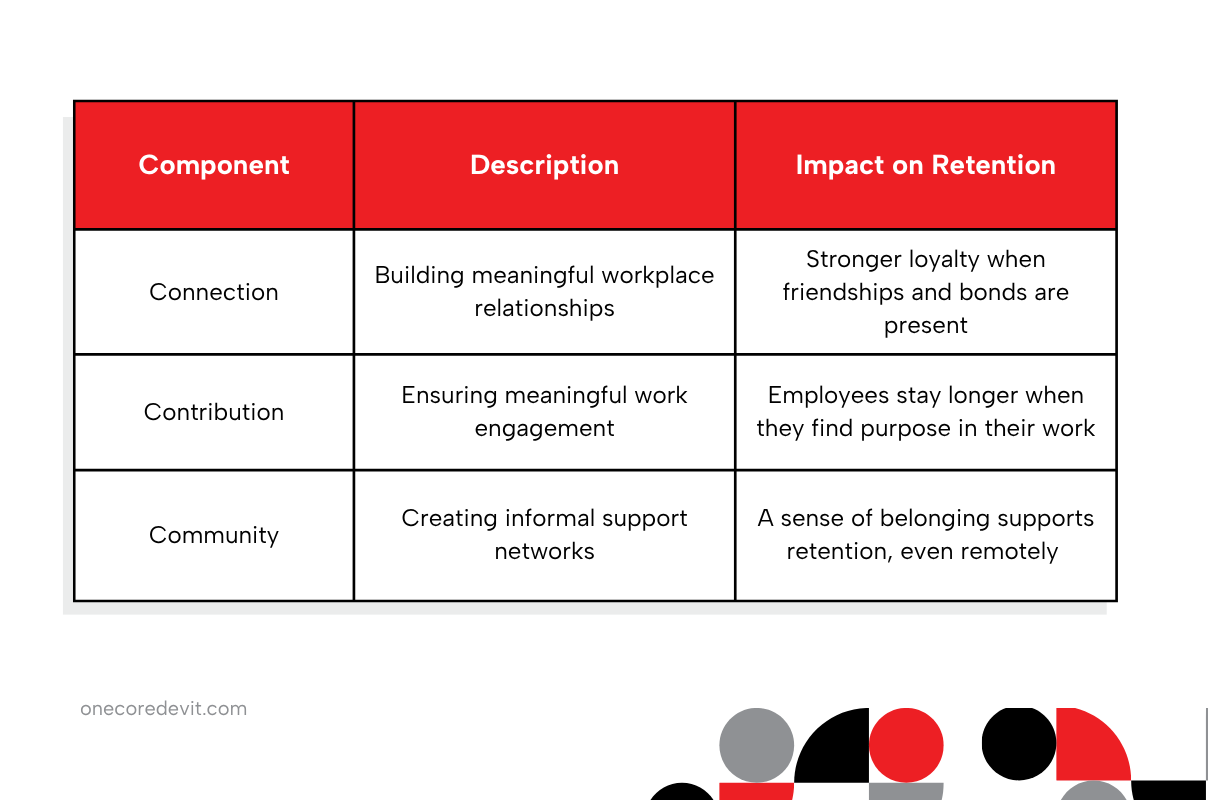
Connection: Building Relationships Across Borders
Filipinos value strong relationships, at work and beyond, making connection essential to retaining talent and creating a positive remote culture.
You can strengthen workplace connections by:
- Scheduling one-on-one check-ins not just about work
- Hosting team-building activities that fit time zones
- Celebrating personal milestones and employee wins
- Pairing team members for mentorship and support
Employees with meaningful relationships at work tend to stay longer, proving connection boosts success in retaining talent.
Contribution: Making Work Meaningful
People stay longer when they know their work matters. For Filipinos, a clear sense of purpose drives motivation and loyalty.
Enhance contribution through:
- Showing how each role supports company goals
- Giving consistent, helpful performance feedback
- Offering growth and learning opportunities
- Publicly celebrating achievements and milestones
When work feels purposeful, team members are more likely to stay, a vital strategy for retaining talent.
Community: Creating Belonging Despite Distance
Filipino culture values community and belonging. Even remotely, people thrive when they feel seen, supported, and socially connected.
Build virtual community by:
- Creating group chats for non-work conversations
- Hosting inclusive virtual events across time zones
- Forming groups based on shared interests
- Encouraging shoutouts and peer recognition
Even in remote-first setups, informal social bonds play a big role in retaining talent and reducing turnover.
Cultural Factors Impacting Employee Loyalty in Filipino Remote Teams
Understanding Filipino cultural values is essential for retaining talent from this region. Several key cultural factors directly influence employee loyalty:
Family Orientation
Family plays a central role in Filipino culture. Successful companies understand this value and support it in practical, respectful ways.
Strategies include:
- Offer flexible schedules that accommodate family responsibilities and emergencies.
- Acknowledge significant family events and show genuine interest in employees’ family lives.
- Provide benefits that support the health and well-being of employees’ families.
- Show understanding when sudden family emergencies arise during work hours.
Respect and Hierarchy
Filipino culture emphasizes respect for authority and clear hierarchical structures. When retaining talent from the Philippines, consider how this cultural value affects workplace interactions.
To support this and improve retention:
- Use clear reporting lines to reduce confusion and reinforce structure.
- Give detailed instructions to avoid misunderstandings and help with execution.
- Encourage respectful feedback and questions using safe communication channels.
- Balance directness with politeness when giving instructions or corrections.
Building mutual respect helps create a stable environment for retaining talent long-term.
Hiya (Shame) and Saving Face
Hiya refers to shame or embarrassment and can strongly influence Filipino employee behavior and workplace communication.
To handle hiya respectfully:
- Provide feedback privately to avoid public embarrassment or discomfort.
- Recognize success in group settings but address challenges one-on-one.
- Avoid confrontational language that may cause employees to withdraw.
- Create safe spaces where questions and mistakes are handled kindly.
Technology’s Role in Engaging and Retaining Talent
The right technology infrastructure is essential for retaining talent, especially in remote and offshore work environments. When used effectively, technology enhances engagement, supports daily work, and reduces turnover in distributed teams.
Essential Technology for Remote Team Retention
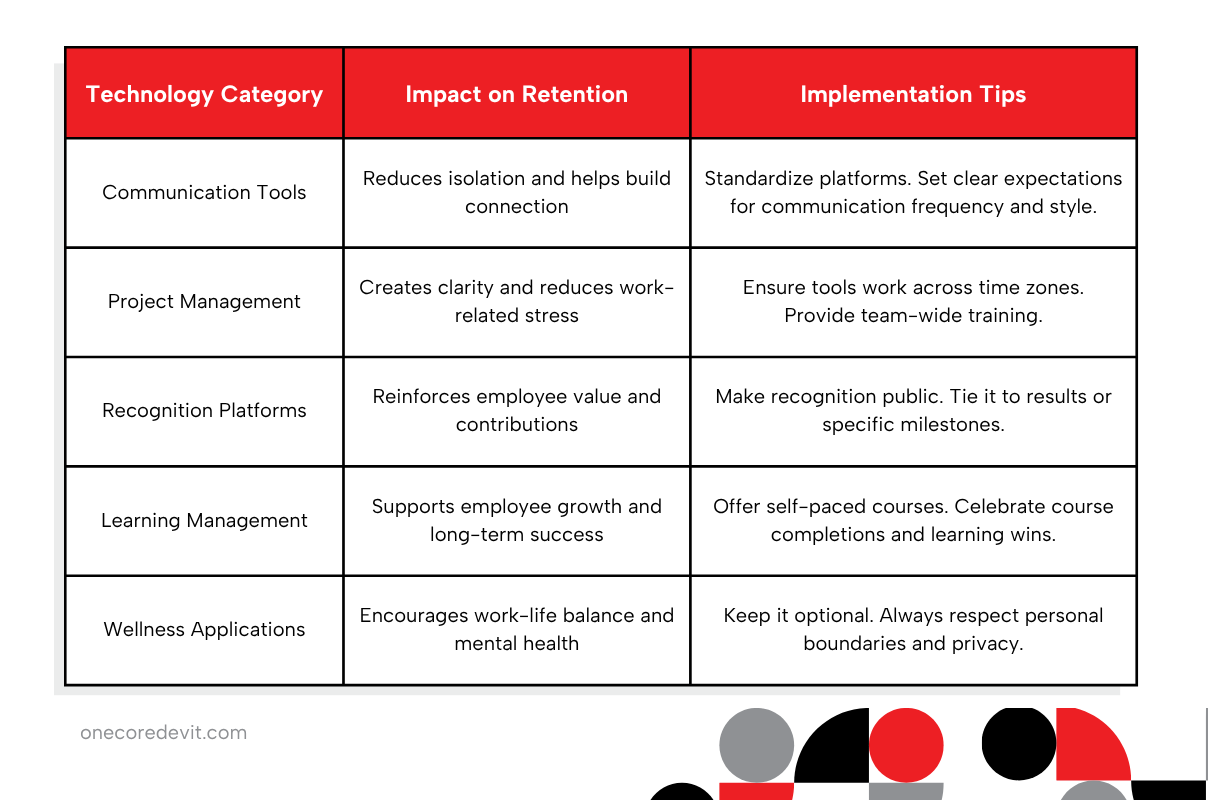
Smart technology choices can keep remote teams productive, connected, and loyal—key elements in retaining talent long-term.
Compensation and Benefits Strategies for Retaining Filipino Talent
While culture and connection matter, competitive pay remains a key factor in retaining talent among Filipino remote professionals.
To stay competitive, consider these compensation strategies:
- Regularly research Philippine market rates to ensure your pay stays competitive and aligned with industry benchmarks.
- Create clear salary bands and define how employees can progress based on skills, results, and responsibilities.
- Offer bonuses based on performance outcomes that are measurable, realistic, and tied to business impact.
- Focus on total compensation; consider both base pay and additional benefits that support long-term employee well-being.
To strengthen retaining Filipino talent, include meaningful benefits beyond salary:
- Provide health insurance plans that cover both employees and their family members.
- Offer professional development stipends for training, certifications, or courses to support career growth.
- Give home office equipment allowances so remote workers can maintain a productive workspace.
- Subsidize internet costs to help ensure reliable and fast connectivity for remote work.
- Include mental health services, like counseling or wellness programs, in your benefits package.
By aligning your compensation strategy with these needs, you don’t just attract talent; you focus on retaining talent long-term.
Career Development: A Key Driver for Attracting and Retaining Talent
Career growth consistently ranks among the top factors influencing employee loyalty and engagement across all industries and regions. For Filipino professionals, clear advancement paths significantly affect their decision to stay with a company long-term. Offering growth opportunities is a powerful strategy for both attracting and retaining talent in today’s competitive market.
Effective career development strategies include:
Structured Growth Paths
Design clear, achievable career progression frameworks that show Filipino team members their long-term value and future with your company. This transparent structure demonstrates long-term commitment, which strengthens trust and helps in attracting and retaining talent effectively.
Skills Development Opportunities
Provide team members access to training, certification programs, and learning tools that help expand and strengthen their professional skills. Investing in continuous learning builds employee loyalty and plays a vital role in retaining talent over the long term.
Consider offering:
- Online learning platform subscriptions
- Certification reimbursement programs
- Internal mentorship opportunities
- Cross-functional project assignments
Leadership Development
Identify and nurture leadership potential from within your Filipino team through targeted growth tracks and coaching. Future leaders who understand both your company and Filipino work culture are crucial to long-term business success. Creating this leadership pipeline is an effective way to grow from within and improve success in retaining talent.
Implementing a Comprehensive Strategy for Retaining Diverse Talent
Retaining diverse talent requires a holistic approach that addresses multiple aspects of the employee experience. For Filipino remote workers, consider this implementation framework:
- Assessment: Review retention data and feedback to identify specific issues affecting engagement and reasons employees choose to leave.
- Strategy Development: Build initiatives around the 3 C’s: Connection, Career Growth, and Culture of Belonging to support diverse teams.
- Implementation: Launch programs with clear messaging, inclusive leadership, and resources tailored to the needs of Filipino remote workers.
- Measurement: Track turnover rates, engagement scores, and internal promotions to evaluate the impact of your retention efforts.
- Refinement: Use employee feedback and performance trends to adjust and improve strategies continuously.
The Future of Hiring and Retaining Top Talent from the Philippines
The landscape for hiring and retaining top talent continues to evolve. Several emerging trends will shape your approach to retaining Filipino talent in the coming years:
AI Integration and Skill Development
With 62% of global organizations using AI, Filipino teams must be ready for this growing digital shift.
To stay competitive and improve talent retention, companies should:
- Offer basic AI training that matches each employee’s role and responsibilities
- Highlight people skills that work well alongside AI tools and automation
- Share honest updates about how AI will impact different roles and processes
- Involve your team in decisions when introducing AI to daily workflows
Evolving Work Models
The future of work continues to evolve, reshaping how companies support and retain remote Filipino teams.
These models are gaining popularity:
- Hybrid setups that mix remote work with occasional in-person team-building
- Asynchronous work to allow flexible schedules and fewer real-time meetings
- Results-only environments that prioritize output instead of strict working hours
- Four-day workweeks to boost productivity and employee satisfaction
Related post: Remote Work Tools in the Philippines Every Pro Should Know
Building a Sustainable Approach to Retaining Filipino Talent
Retaining talent from the Philippines takes a thoughtful approach that respects cultural values and meets universal employee expectations and needs. Filipino professionals highly value job security, career growth, and a strong sense of community within the workplace.
To retain Filipino talent, offer flexible work setups, regular feedback, recognition, and leadership paths tailored to local cultural strengths.
Start by creating a connected environment to help your team feel supported and committed to growing with your organization. This kind of strategy improves loyalty, performance, and overall satisfaction among Filipino professionals working remotely or in hybrid setups.
Retaining Filipino talent is not a one-time task; it’s an ongoing commitment to building a meaningful workplace culture. The time and resources you invest in retention today will strengthen your team and help build long-term business stability.
Frequently Asked Questions (FAQs)
Q1: What are the main reasons Filipino remote workers leave companies?
The primary reasons include lack of career growth opportunities, inadequate compensation, poor work-life balance, limited recognition, and weak relationship-building. Cultural disconnects and inadequate technological infrastructure also contribute significantly to turnover.
Q2: How does Filipino culture impact retention strategies?
Filipino culture emphasizes strong family ties, respect for authority, community orientation, and indirect communication. Effective retention strategies acknowledge these values by offering flexible scheduling for family commitments, clear hierarchical structures, community-building activities, and tactful feedback approaches.
Q3: What compensation structure works best for retaining Filipino remote talent?
A competitive base salary combined with performance-based incentives works well. Additionally, benefits that support family wellbeing (health insurance covering dependents), professional development opportunities, home office stipends, and internet allowances significantly enhance retention.
Q4: How can I measure the effectiveness of my retention strategies?
Track key metrics including retention rate, average tenure, engagement scores from regular surveys, promotion rates among Filipino team members, and referral rates. Compare these metrics before and after implementing new retention initiatives to measure effectiveness.
Q5: What technology tools are essential for retaining Filipino remote workers?
Essential tools include reliable video conferencing platforms, asynchronous communication channels, project management software accessible across time zones, recognition platforms, learning management systems, and wellness applications. Ensuring proper training on these tools is just as important as providing them with proper training.
Q6: What is retaining talent?
Retaining talent means keeping valuable employees engaged, satisfied, and committed to staying with your organization long-term. It involves creating a positive work environment, offering growth opportunities, and meeting employees’ personal and professional needs.
Q7: What are the 3 C’s of retention?
The 3 C’s of retention are Connection, Cotribution, and Community. Filipinos value strong relationships, clear sense of purpose, and belongingness.
Q8: Why is it important to retain top talent?
Retaining top talent ensures business continuity, reduces hiring costs, and protects institutional knowledge. Loyal, high-performing employees also drive innovation, productivity, and long-term success.
Retention starts with creating a workplace people love, and we’ve seen that firsthand. At CORE®, we help you keep your Filipino team engaged through customized support and a deep understanding of what makes talent stay. We’re proud to be Great Place To Work® Certified™, because our people believe in the culture we’ve built. Partner with us today!